

Granella Salata
A Parmesan alternative that functions instead of copies.

“What’s for dinner?”
“Spaghetti. Go wash up...your father will be home soon.”
The thick aromas of slow-simmering tomatoes, caramelized sugars, pungent garlic, and oregano hit me with a mash-up of savory waves, making my stomach jump with fierce anticipation. Spaghetti Bolognese, although it was never called that in our Americanized home, was just spaghetti...and it was everything I craved.
We sat at the table—the same seats every night. My brother to my left, my sister opposite me, my father at the head of the table, and my mother to my right, where she sat when not too busy serving the needs of her family.
The salad arrived first. It was a simple mix of iceberg lettuce, tomatoes, radishes, and carrots. Croutons were occasionally added. A simple dressing of oil and vinegar brought the salad to life. My sister never liked an opening salad. Its presence usually sparked a lengthy argument between her and my father. Spaghetti night was the exception; there wasn’t enough time to waste on petty details like the merits of eating salad. Conversations remained quick and without detail.
The piping-hot spaghetti arrived in a large serving bowl shortly after the salad plates were cleared. The rich, meaty tomato sauce followed closely behind, arriving in its simmering pot. It was set in the section of the table between my mother and me...a fortunate placement that allowed me to sneak a few slurpy bites in while the others were being served. My father would glare at my poor manners—message received—but no further confrontation followed. He was also hungry, and there would be plenty of time later to discuss manners...or to bicker incessantly with my brother.
The sauce was not mixed into the spaghetti, as is the norm in places that know such things. Instead, a heaping ladle of sauce was spooned over the spaghetti on the plate. This way of serving spaghetti never bothered me when I was young. I was too caught up in anticipation to worry about cultural serving norms.
The grated cheese was the final addition. In our case, Parmesan cheese arrived pre-grated in that green shaker can from Kraft. We expected it...and it was all we knew. I covered my sauce with the stuff and never wondered what real Parmesan cheese tasted like. Our little corner of America was too far from Italy to question authenticity.
I liked sprinkling vast amounts of this faux cheese on my spaghetti, though I don’t recall why. Was it the taste? Maybe it was how the texture blended with the sauce. But it belonged... it became an extension by default. I couldn’t conceive of spaghetti night without the topping. In my mind, it would be better to leave the spaghetti out and eat the sauce with the cheese (something I cautiously did with leftovers and sleeping parents).
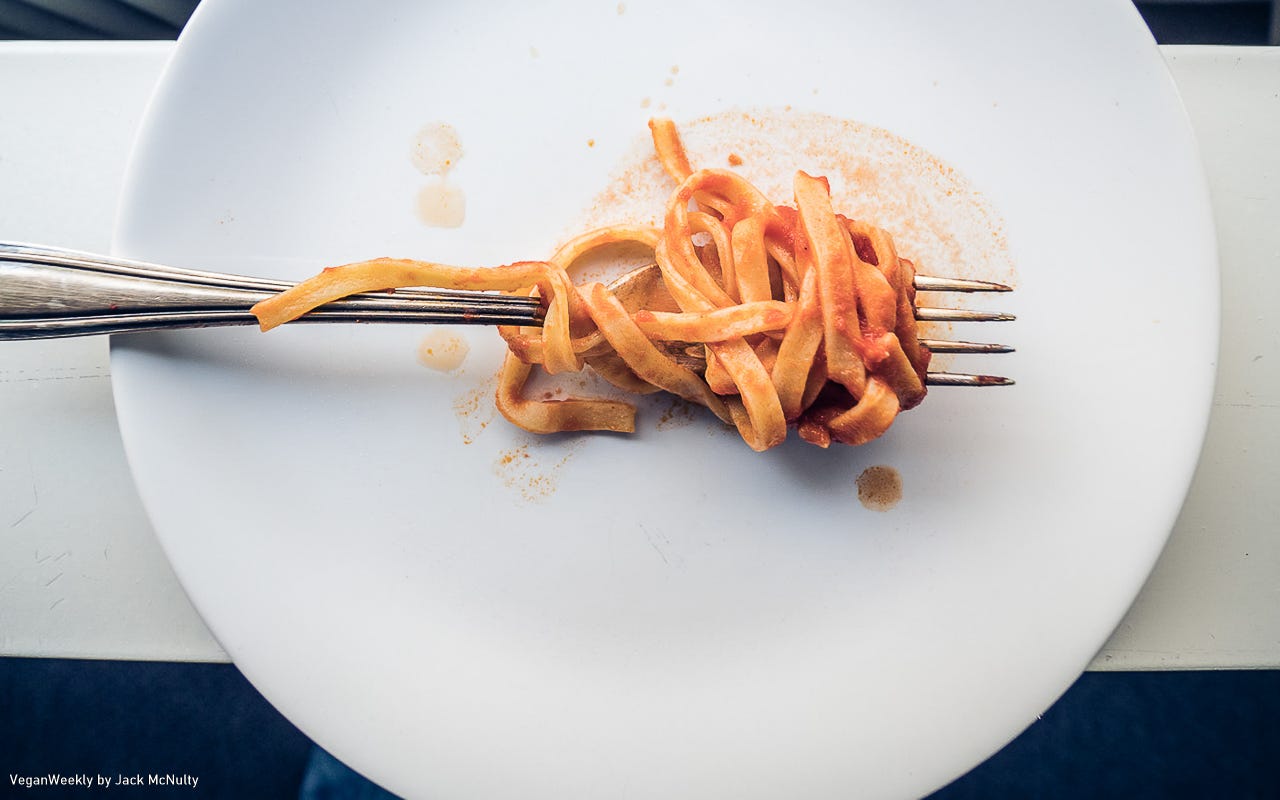
Two of the most influential English-language voices on Italian cooking essentially wrote cheese into the DNA of pasta dishes. It wasn’t done through dogma but through repetition and framing. Marcella Hazan strongly encourages serving cheese with butter-based sauces and leaving it out when serving olive oil-based sauces. Elizabeth David treats cheese as an assumed ingredient. Most of her pasta recipes instruct the reader to toss with cheese and serve additional cheese on the side.
Neither author felt the need to question the use of cheese to finish a pasta dish. In their view, there was nothing to question. And that’s precisely how defaults become invisible. They become legitimized by authority, repeated by readers, and alternatives are never considered. Removing dairy from my cooking forced me to open the door on alternatives I had never needed to consider.
The obvious move was to look at what already existed. Cookbooks and the internet offered versions of varying quality...mostly nut-based mixes flavored with nutritional yeast. The first time I made a cashew-based parmesan alternative, I wasn’t disappointed exactly...I just knew something was missing. In fact, I couldn’t help thinking why I bothered with the nuts at all. Naked nutritional yeast actually felt more interesting.
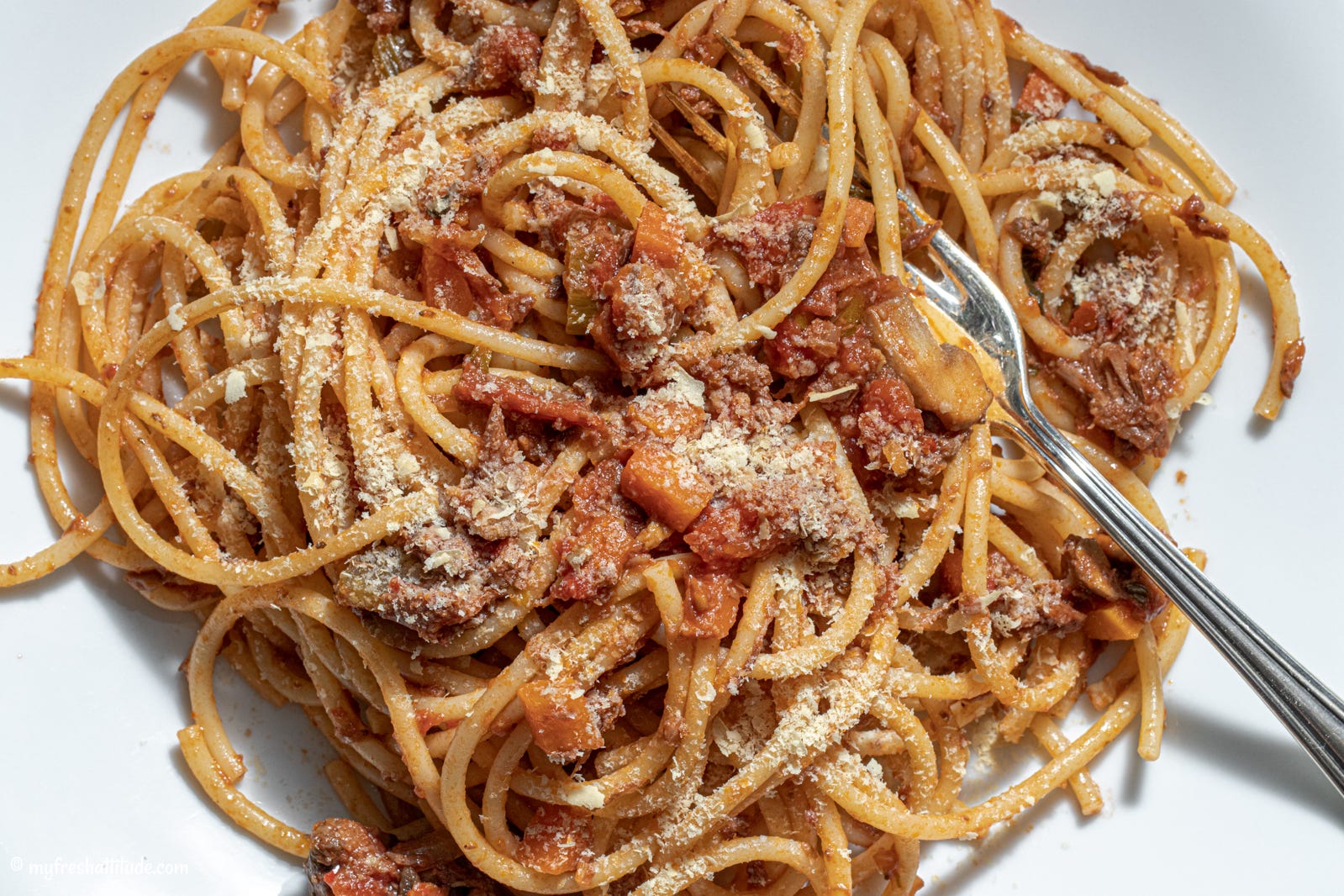
Then, supermarkets began stocking pre-packaged alternatives. I was excited...until I tried a few. They offered high-priced convenience with essentially no distinguishing feature.
I kept returning to the same issue, and I wanted to understand why these options didn’t feel quite right. The answer took longer to arrive than I expected. I knew I had to look beyond a recipe and start from a different question entirely.
Every nut-based version of faux Parmesan shared similar characteristics. The texture always had that nagging gritty sensation that didn’t feel like cheese. Sure, the salt and nutritional yeast did their part, but the grainy texture of nuts remained dry on the sauce. I remember Parmesan softening and pulling a sauce together, coating the pasta in every bite. That’s what was missing from plant-based alternatives, and that’s what I needed to replace.
I spent a long time looking for the fix in the wrong places. Different nuts and different processing methods. More yeast. Different ratios. Incorporating trendy miso. The experiments were interesting, but the problem was the same—a condiment that didn’t work with the sauce...a product substitution instead of a solution.
Parmesan has an enormous glutamate load. This is the compound that’s responsible for deeply satisfying savory notes. The fats in the cheese gently emulsify into a sauce when warmed, softening and binding it rather than sitting separately on top. But what really sticks in my mind when I recall how Parmesan cheese tasted is that unmistakable fat-coating-the-mouth sensation that hung around long enough to encourage another bite.
Combining two forms of yeast tackles the glutamate problem. Nutritional yeast contributes its familiar cheesy warmth, and yeast extract adds concentrated depth...taking the savory notes to a...well, cheesier level.
Ground golden flaxseeds combined with potato starch offer just enough binding strength to keep the mixture stable and, crucially, act as a mild thickening agent when mixed into or on top of warm sauces. That gentle thickening is what slightly melted cheese does in a warm sauce.
A pinch of citric acid introduces another element most other alternatives never bother to address—the slight acidic pull on saliva glands that’s prevalent in young Parmesan cheese.
The final step is counterintuitive. Most recipes carefully warn against overprocessing of the nuts to avoid fatty clumps reminiscent of nut butter. But this leaves a gritty, dry sensation...and that’s what I wanted to avoid. I push the mixture past the point of comfort by increasing the processing and forcing the cashew nuts to release enough of their natural oils to bring everything together into a cohesive clump at the bottom of the food processor.
Then I do it again.
What comes out of the processor is slightly moist and unified. It presses together when squeezed. It softens ever so slightly on contact with heat. It coats, rather than sitting there trying to figure out what role it should play.
I put a spoonful in my mouth. It’s smooth, soft, and cheesy. I can feel a slight tang. Every part of my mouth is coated with a film of savory fat. It lingers long enough for me to notice I want another bite.
This was the solution I was searching for. I decided to call it Granella Salata...a term that literally means salted crumble...a deserving name for a condiment that functions instead of copies.
Granella Salata
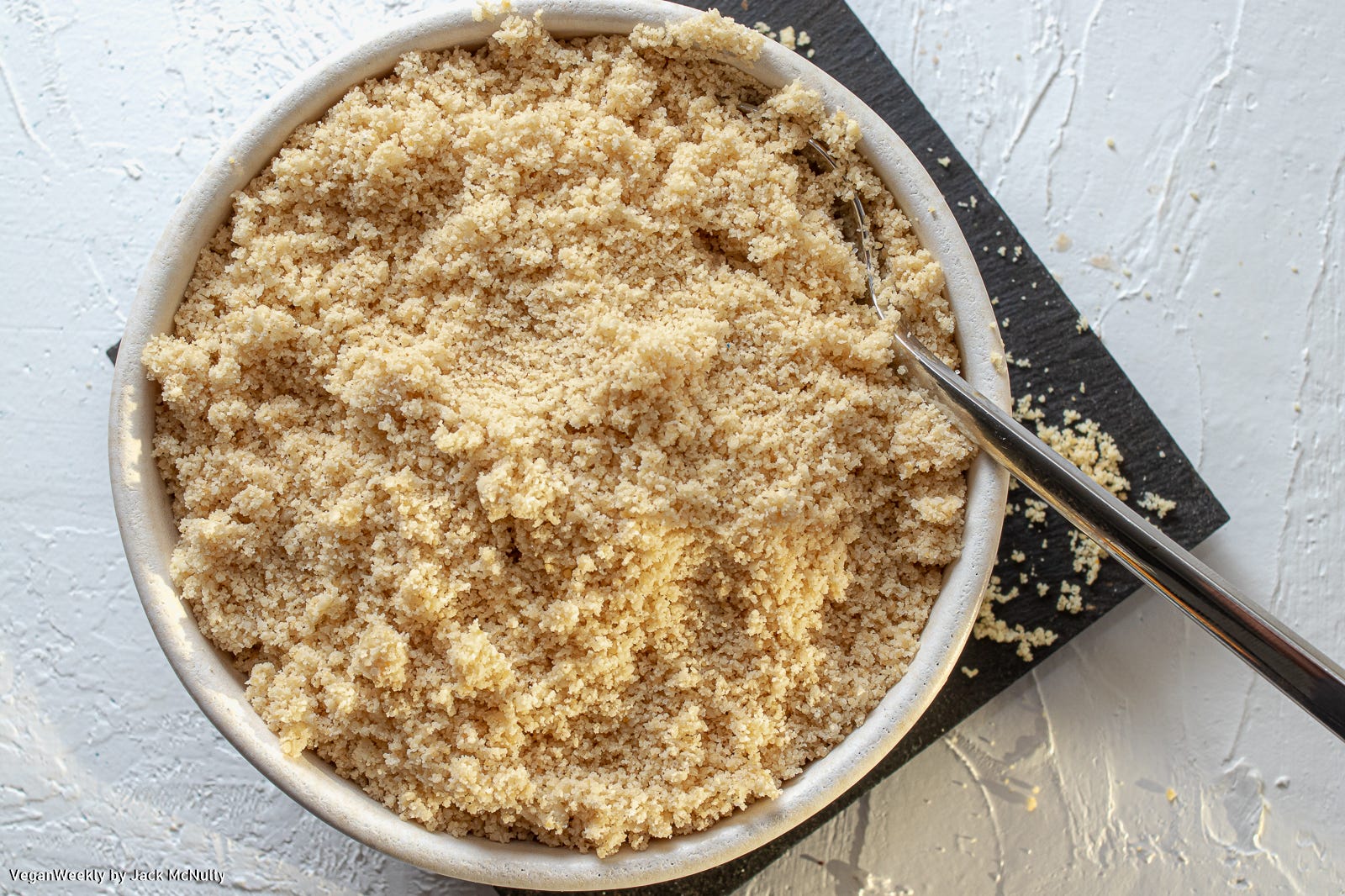
The complete Granella Salata recipe is available for paid subscribers. It includes a full ingredient list with weights and measures, detailed method notes on the two-stage processing technique, storage guidance for both pantry and refrigerator, and tips on substitutions for less common ingredients. The recipe makes approximately two cups—plenty to keep within reach and use generously.
Please consider supporting my work through a paid subscription. Take advantage of my summer offer and receive a 25% discount for an annual subscription—a total of 22.50 euros. Your contributions help me keep this project running.
Thank you for being part of this growing community of thoughtful creators and mindful eaters.
Social Media
I’m no longer engaged with Facebook or Instagram. Please follow me on Bluesky or LinkedIn to connect.
Kudos to you, Jack, for cracking this nut, so to speak. I am sure much work went into it. I can imagine how delicious it must be.
Brilliant. That sounds like exactly what's missing. I do an OK Brazil nut with nutritional yeast and more salt than is good for you, and it's nice, but not CHEESY. This sounds perfect.
And the novelist and novel-writing tutor in me enjoyed how you kept us in suspense. I hope these stories are going in your book, Jack?